Roswell gutter installation, sized for Georgia rain
Gutters get no glory until a July downpour finds the gap between roof and foundation. We form aluminum runs on site to your exact roofline, hang them on hidden fasteners, and route the downspouts somewhere useful, so the next storm drains quietly instead of carving trenches through your beds.
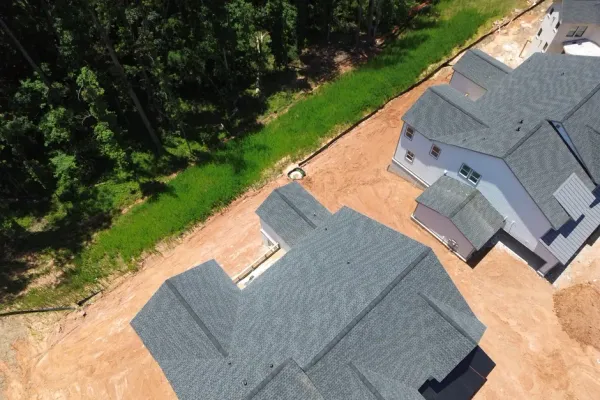
Roofers first, which changes how we hang gutters
We came to gutter work from the roofing side, and it shows in the questions we ask. Where do your valleys concentrate flow? Is there drip edge behind the existing run, or does runoff wick straight onto the fascia? What happens to the water once it reaches grade? A gutter guy measures footage. A roofer reads the whole path from shingle to soil, then builds the system backward from where the water needs to end up.
Most of the houses we work on, from Martins Landing up to the subdivisions off Holcomb Bridge Road, went up decades ago, and a fair number still drain through their original builder-grade gutters: undersized, joint-heavy, pulling loose at the miters. Roswell's mature hardwoods make it worse, feeding a steady diet of leaves and oak catkins into runs that were marginal when new.
Our installs are one-piece aluminum, formed in the driveway from coil stock and cut to the inch. No mid-run joints to split open in year six. Hangers go in tighter than code asks. Downspouts get planned on paper before anyone climbs a ladder, because relocating one after the fact is the most avoidable change order in this trade.
Pricing starts at $1,000 for a full install, and every job carries a written workmanship warranty. If the fascia behind your old gutters turns out soft, we repair the wood before the new run goes up. Nobody should hang fresh material on rot, at least not twice.
Formed in your driveway, cut to the inch
Coil stock goes into the machine, a finished run comes out matching your fascia line exactly. Continuous runs mean the only joints on the house sit at corners and outlets, which is where we concentrate the sealing work.
Water planned all the way to the ground
Every estimate maps where each downspout discharges: onto splash blocks, into extensions, or toward the low side of the lot. Georgia clay holds moisture against foundations, so getting discharge right matters as much as the gutter itself.
Heavy-gauge aluminum on close-spaced hangers
Thicker coil resists ladder dents, limb strikes and hail better than the thin stock volume installers run. Hidden hangers go in every two feet into solid wood, so runs stay straight under a full load of water.
Old runs hauled off, new ones water-tested
Tear-out, haul-away and disposal are part of the job, not an add-on. Before leaving we run water through every section, check flow at each outlet, and sweep the beds and driveway. You get a system proven to drain, not one that merely looks right.
The case for runs without joints
A gutter fails at its joints. That is nearly the whole argument. Sectional systems, the kind sold in ten-foot sticks, put a sealed seam every few feet along the run, and each seam lives a hard life: baking through Georgia summers, swelling and shrinking with every temperature swing, catching every twig the canopy drops. Sooner or later one lets go, usually over the front walk. Runs formed from continuous coil eliminate the mid-span seams entirely. The only sealed points left are corners, end caps and outlet drops, and we treat those few spots with real care instead of spreading sealant across forty joints and hoping. Fewer seams also means cleaner sightlines, which counts on street-facing elevations where a striped, patched gutter line cheapens an otherwise sharp house. The cost difference is modest. Continuous runs price a little above sectional up front, then spend the next two decades not needing joint repairs, which is where sectional systems quietly eat their savings. On a typical Roswell two-story, the forming machine justifies its visit the first time a February ice load tests a seam that no longer exists.
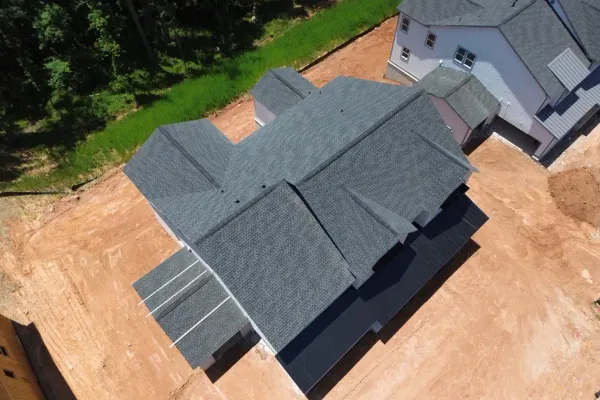
Pitch is a math problem, not an eyeball call
Level looks right and drains wrong. Runs need deliberate fall toward their outlets, roughly a quarter inch every ten feet, and the tolerance for error is smaller than most crews treat it. Too little pitch leaves standing water that breeds mosquitoes, loads the hangers, and corrodes the trough from the inside out. Too much drops the far end visibly below the fascia line and shrinks how much roof the gutter can actually catch in a hard rain. We shoot each run before forming it, set the high point, and split long runs toward two outlets rather than asking one downspout to swallow half the roof. Valleys deserve particular respect. Where two roof planes meet, water arrives concentrated and moving fast, and the stretch of gutter below a valley needs capacity, sometimes with a splash guard, to keep a thunderstorm from launching runoff clean over the lip. Roof pitch factors in as well; steeper slopes accelerate water enough to overshoot a standard trough. None of this is exotic. It is arithmetic done before the ladder comes off the truck, and it separates a system that handles a gullywasher from one that just decorates the eaves.

What your new gutters will be hanging on
New gutters are only as solid as the board behind them, so our installs begin with a slow lap around the house checking fascia and sub-fascia. Years of overflow from failing gutters is precisely what rots this wood, which means the houses that most need new gutters are the ones most likely to have soft spots hiding behind the old run. We probe, mark and photograph anything questionable. Small sections get cut out and replaced the same day; larger rot problems get an honest conversation before work proceeds, because driving hangers into punky wood buys you a gutter that peels off in the first ice storm. Where the wood is sound, fasteners reach through the fascia into rafter tails whenever framing allows, spaced every two feet. That spacing runs tighter than the minimum most installers use, and the reason is simple: a full trough of water is heavy, wet oak leaves are heavier, and the occasional ice load tests every screw on the run. Miters and outlet drops take an extra hanger on each side, since those points carry the most stress. It is an unremarkable checklist. Skipping it is why so many gutters around town sag.

Downspouts, discharge and Roswell's red clay
Collecting water is the easy half. Getting rid of it is the half that protects the house. Georgia red clay drains slowly, holds moisture against foundation walls, and swells and shrinks through the seasons enough to move slabs and crack crawlspace piers when downspouts dump at the corners. So discharge gets planned lot by lot. On terraced yards that step down toward the Chattahoochee, we route water to daylight on the low side and away from retaining walls. On flatter lots we use extensions or buried pipe to carry discharge past the backfill zone, that ring of loose soil around the foundation that swallows water straight down to the footing. Downspout count follows roof area. One outlet serves only so many square feet of shingle before a heavy storm backs the system up, and adding a second drop during an install costs little compared to retrofitting one later. We think about people too, keeping outlets clear of walkways, driveways and the path where you drag the trash cans. Splash blocks come standard; drain lines get quoted when a lot genuinely needs them, plainly and without drama.
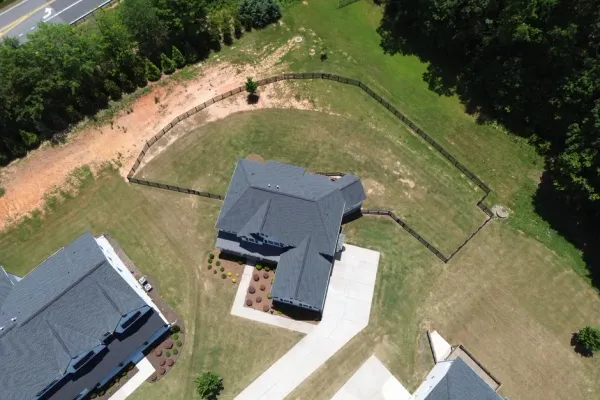
Aluminum, and why we keep choosing it
Every material in the gutter aisle has a sales pitch, so here is ours. Vinyl is cheap and behaves like it: brittle in cold snaps, saggy by year five, joint-heavy by design. Steel is strong but rusts from the first scratch onward, which in a humid climate is a countdown rather than a risk. Copper is genuinely beautiful and genuinely expensive, a fit for a handful of Historic Roswell restorations and little else we see. Aluminum earns the rest of the work. It never rusts, weighs little enough to hang securely on standard framing, shrugs off temperature swings, and takes a factory finish that outlasts field-applied paint by a decade. We form from heavy-gauge coil rather than the thin stock that keeps some bids suspiciously low, because gauge is where dent resistance and span strength come from. Finish colors run from standard white through bronzes, grays and darker trim shades, and the factory coating resists the chalking and fade that budget material develops after a few summers of direct Georgia sun. Matched downspouts, elbows and miters complete the kit. Nothing on the truck is exotic. It is proven material, specified a step heavier than it strictly has to be.

When to schedule, and what pairs well with the job
Gutter work moves quickly, a day for most houses, so scheduling is more about pairing than season. The single best time to install new gutters is alongside a roof replacement: the old run has to come off anyway for drip edge and fascia work, the crews coordinate instead of collide, and the finished edge integrates cleanly from shingle to trough. If a new roof sits anywhere on your horizon, price the two together; our roof replacement quotes can fold gutters in. Failing that, late fall after the oaks finish dropping is a smart moment, since the new system starts life clean, and early spring gets you ahead of thunderstorm season. Weather moves individual install days around. Aluminum forms best above freezing, sealants cure poorly in rain, and careful ladder work does not happen in a gusting front, so we watch the radar and communicate rather than force a bad day. What we avoid is the six-week backlog. Gutter installs slot between larger roofing projects, which usually puts a crew on site within days of an approved quote, not months.

Proof before payment: the water test
The last tool on every install is a garden hose. Talking about correct pitch is easy; watching water actually travel the run and exit the downspout is the only proof that counts, so we test every section before packing up. Water goes in at the high points, and we watch for the things that embarrass installers later: pooling at mid-span, backflow at the miters, weeping at end caps, an outlet that gurgles instead of swallows. Anything off gets corrected on the spot while the ladders are still up. You are welcome on that walkaround, and honestly we prefer you join it. Five minutes of watching your own system drain teaches you what normal looks like, so you will recognize abnormal two years from now when a clog or a settled extension changes the pattern. We photograph the finished runs, note the layout for our records, and hand over the paperwork: warranty terms in writing and an itemized invoice matching the quote you approved. Then the boring part begins, which is the point. A drainage system doing its job generates no stories. Yours should be the last interesting thing that happens at your roof edge for a long while.

The paperwork that follows the crew home
Two separate promises cover a new gutter system, and it helps to know which is which. The manufacturer's finish warranty covers the coil itself: fade, chalking and coating failure over a span measured in decades. Our written workmanship warranty covers everything we did with that material, meaning the pitch, the hangers, the sealed miters and the downspout connections, which is the part that actually determines whether the system works. If a joint we sealed starts weeping or a run we hung drifts out of level, that is ours to fix, and we are a local call rather than a national hotline. Keep the documents with your house records; transferable paperwork quietly helps at resale when a buyer's inspector starts poking at the roofline. Aftercare is simple and worth doing. Under Roswell's canopy, gutters want attention at least twice a year, and our gutter cleaning crew or a standing maintenance plan can carry that chore if ladders are not your hobby. Guard screens cut the workload further, and we quote them alongside any install. However you handle upkeep, the promise stays plain: it is in writing, and we answer the phone when you call it in.
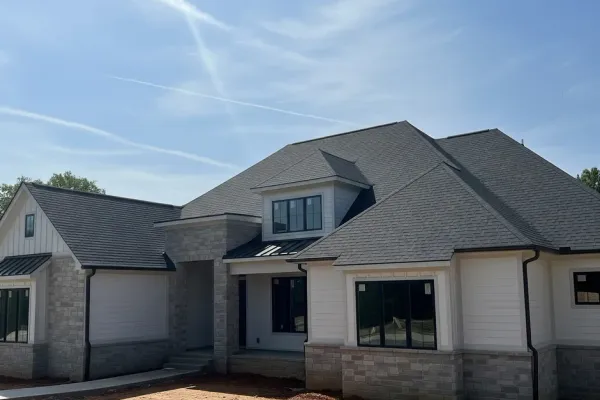
What new gutters run in Roswell
Installed systems start at $1,000. From there, four measurable things set the quote: linear footage, corner count (every miter gets formed and sealed by hand), the number of downspout drops, and working height, since a two-story rear elevation over a walkout basement takes staging a single-story ranch never needs. Fascia repairs, when probing finds rot, get itemized separately so you can see that cost for exactly what it is. Guard screens add from $500 and pay for themselves fastest on heavily treed lots. The full list sits on our prices page next to the rest of the roofing menu.
One planning note that saves Roswell homeowners real money: if your shingles are within a few years of retirement, run the replacement numbers before committing to standalone gutters. The roof cost calculator measures your roof from satellite imagery and prices a new one in about a minute, and bundling gutters into that project trims cost from both sides of the job. Prefer a person over a tool? Book a free estimate and we’ll measure everything in one visit.
Gutter questions Roswell homeowners actually ask
Do I need five-inch or six-inch gutters?
Roof area and pitch decide, not fashion. Five-inch troughs handle most single-story ranches without complaint. Steep roofs, long uninterrupted runs and big rear planes draining toward one corner push volumes that justify six-inch runs with oversized downspouts. Plenty of 1980s and 90s Roswell houses got the smaller profile regardless of what their roofs actually shed, which is part of why their corners overflow in summer storms. We size from measurements and show you the arithmetic.
Can you install over my existing fascia and trim?
Usually, and we check rather than assume. Sound wood takes hangers directly. Fascia wrapped in aluminum trim gets probed carefully, since wrap can hide soft wood while looking perfect from the driveway. Any rot gets repaired before new material goes up, full stop, because fastener grip is what keeps a loaded gutter on the house through a storm. If your soffit and fascia need broader carpentry, we fold that into the same project rather than sending you hunting for a second contractor.
Will new gutters fix the water in my crawlspace?
Often they help substantially, and sometimes they are only part of the answer. Gutters and downspouts control roof water, the largest single contributor to wet crawlspaces in our clay soils. If grading slopes toward the house or a seep runs under the footing, drainage work beyond gutters may still be needed, and we will say so plainly instead of overselling an install. Fixing the roof water first remains the right order of operations; it is the cheapest piece and frequently the decisive one.
How long does an installation take?
Most Roswell homes are a one-day job: tear-out in the morning, forming and hanging through midday, then downspouts, water testing and cleanup by late afternoon. Large or complicated rooflines can stretch into a second day, and fascia repairs add time when we find rot behind the old runs. You do not need to be home while we work, though we like doing the final walkaround together when your schedule allows it.
Get a gutter quote measured, not guessed
One visit, a tape measure and a straight conversation about where your water should go. The estimate is free, itemized in writing, and good whether you're replacing tired gutters or finishing out a brand-new roofline.
Not sure what a new roof runs? Estimate your roof cost in Roswell, measured from satellite imagery, or run a storm & insurance damage check.