Roofing crews that respect a Horseshoe Bend roofline
Horseshoe Bend sits inside a bend of the Chattahoochee in east Roswell, a golf and country club community where 1980s and 1990s traditional homes carry some of the most complicated rooflines in the city. Intersecting gables, hipped wings, long valleys, and tall chimney chases are normal here, and so is wind that comes up the river corridor with little to slow it down. Roofs like these punish guesswork. We walk every plane, quote every detail, and put the whole thing in writing before work begins.
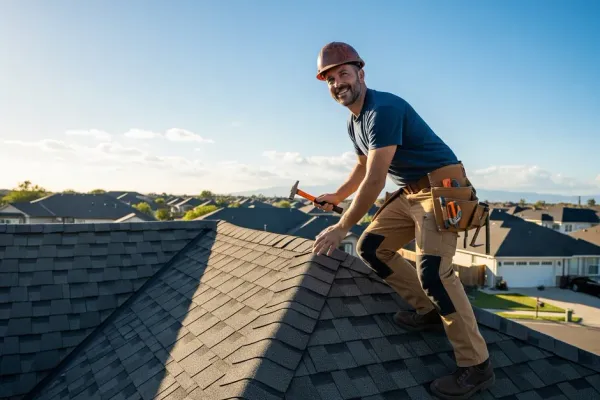
Complex roofs reward crews that have seen them before
Best Roswell Roofer is a local roofing company that treats a roofline with a dozen planes as a normal Tuesday. We are operated by North Atlanta Roofing, we install GAF and CertainTeed systems built for Georgia weather, and we back every roof with a written workmanship warranty.
Experience shows up in the details on a roof like yours. Valley metal chosen for the debris load. Step flashing run correctly against tall chimney chases. Ridge caps fastened for wind that funnels along the river. The difference between a crew that has done this and a crew that has mostly done ranch houses is measured in years of leak-free service, and it costs about the same either way.
Roofline complexity priced honestly
Every additional plane adds flashing, valley metal, ridge, and labor. Our estimates itemize those quantities instead of burying them in a lump sum, so you can see exactly why a Horseshoe Bend roof prices differently than a simple gable across town.
Storm documentation for river-corridor claims
Wind and hail claims live or die on evidence. After storms cross the corridor, crews photograph every slope, mark impacts, and hand your insurer a documented file. We work with all major carriers on storm claims across Roswell, Horseshoe Bend included.
More planes mean more valleys, and valleys decide everything
The traditional architecture that defines Horseshoe Bend, gables stacked over garages, hipped wings, dormered bonus rooms, produces roofs where a dozen planes drain into a handful of valleys. Each valley concentrates water from hundreds of square feet of shingle into a channel a few inches wide, and each one depends on correct metal, correct underlayment lapping, and shingle trimming done by someone who cares. Most of the leaks we chase in the neighborhood trace back to a valley or a flashing junction rather than the open field. When we bid a roof here we measure and price those details individually, because that is where the roof will succeed or fail.

Wind works harder along the river corridor
The Chattahoochee cuts a broad path below Horseshoe Bend, and storms that ride the river corridor hit these streets with gusts inland neighborhoods never feel at full strength. Wind uplift starts at the edges: rake trim, eave starter courses, ridge caps, and any tab where a previous installer went light on nails or the adhesive strips never sealed. On exposed lots near the golf course we spec six-nail fastening, proper starter strips at rakes and eaves, and hand-sealing where the orientation calls for it. After a major blow it is worth having edges and caps checked even when nothing visibly left the roof, because a broken seal today is a lifted shingle in the next storm.
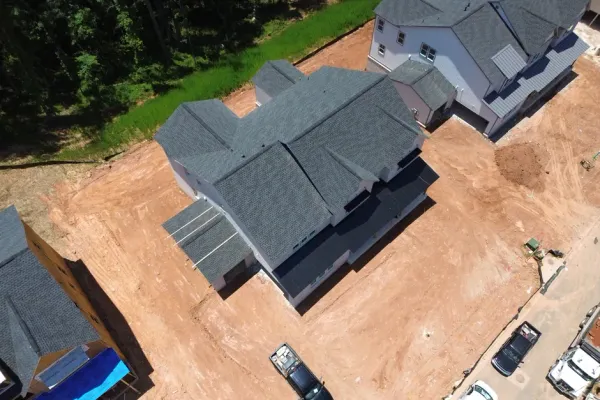
Replacement age has arrived for the original build era
A house finished in 1988 has now had time to wear out two roofs, and much of Horseshoe Bend is due or overdue for its next cycle. Roofs replaced in the 2000s are deep into their service life, showing granule loss, exposed mat on southern exposures, and brittle pipe boots at every penetration. The good news is that replacement today buys real upgrades over what comes off: synthetic underlayment, ice and water shield in the valleys, higher wind-rated architectural shingles, and modern ridge ventilation all outperform their 2000s equivalents. We help owners time the decision honestly, repairing where a roof has life left and replacing when spending more on patches stops making sense.
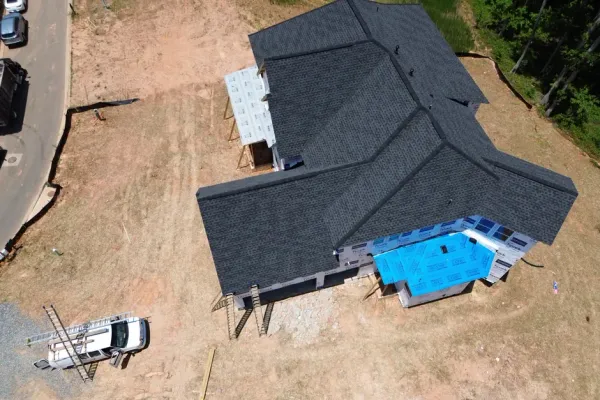
Golf-course lots trade shade problems for exposure problems
Fairway-adjacent homes in Horseshoe Bend live under more open sky than most of wooded east Roswell, and their roofs age on a different schedule. Full sun accelerates thermal cycling, which fatigues shingles and dries out sealant lines years ahead of shaded lots, while the open exposure gives hail and wind a cleaner shot. Homes backing the course also read differently from the rear, where a patchy repair is visible to everyone playing through. We match shingles carefully on partial repairs, feather new courses into old rather than squaring off obvious rectangles, and flag sun-side slopes that are aging ahead of the rest so owners can plan instead of react.

Valley wear shows up long before the ceiling stain
Rooflines in this neighborhood concentrate their risk, which makes inspections unusually valuable. Granules stripping from valley channels, sealant cracking at step flashing, rust freckles on older valley metal, and lifted ridge caps all telegraph trouble one to three years before water reaches drywall. An annual look, plus a check after any hailstorm that crosses east Roswell, catches those signals while the fix is a service call instead of a claim. Crews reach Horseshoe Bend quickly off the Holcomb Bridge corridor, and findings come back the way everything else does: photographed, written, and itemized, with honest advice about what needs doing now and what can wait.
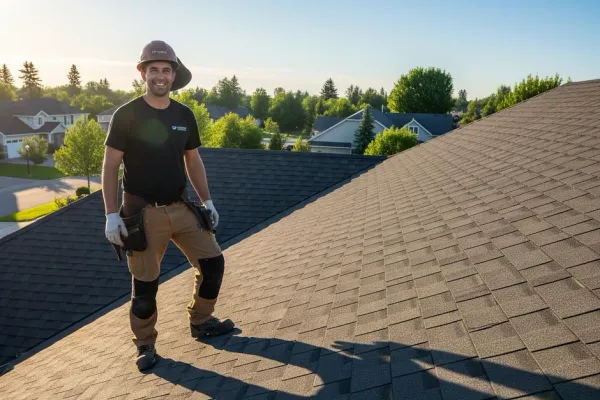
Horseshoe Bend takes its name and its shape from the Chattahoochee, which wraps the community on its way past east Roswell. Built out through the 1980s and 1990s around a golf and country club, the neighborhood filled with traditional homes on a scale ambitious for its era: brick and stucco elevations, two-story foyers, and the multi-plane rooflines that came with them. Access runs through the Holcomb Bridge corridor with GA-400 a short drive on, but the streets themselves stay quiet, wooded, and shaped by the river.
Those rooflines are the neighborhood’s roofing story. A typical Horseshoe Bend home carries intersecting gables and hips, several valleys, dormers, and chimney chases, all of it now decades into service against Fulton County weather.
Traditional homes, untraditional rooflines
Roof geometry drives everything here: material quantities, labor hours, failure points, price. Valleys and flashing junctions, not open shingle fields, produce most of the leaks, and edges take the worst of the wind the river corridor delivers. The build era matters just as much. Homes from the 1980s and 1990s are on their second or third roof cycle, and each replacement is a chance to upgrade underlayment, valley protection, fastening, and ridge ventilation well past what the original builder installed. A bid that treats a Horseshoe Bend house as a simple rectangle with a pitch is a bid that missed the point.
Replacement, emergencies, and the work in between
Full roof replacement is the headline service in a neighborhood at this age, and geometry-heavy homes benefit most from a crew that itemizes rather than averages. Storm damage routes through emergency roof repair, with 24/7 tarping and documentation built for insurance claims. Between those extremes, gutter installation keeps water management matched to big, complicated roof surfaces that concentrate runoff hard in a Georgia downpour. Budgeting first? Price the project in about two minutes and bring the number to your inspection.
Around the bend and across east Roswell
Horseshoe Bend anchors the eastern end of our Roswell coverage, alongside Martins Landing up the Holcomb Bridge corridor and Historic Roswell by the square. Crews cross the neighborhood weekly, response times stay short, and every project starts the same way regardless of address: set up a free inspection, see the photos, read the itemized estimate, and decide without pressure. The river shaped this community. Weather off the river should not get to shape your ceilings.
Do complex Horseshoe Bend rooflines change what a new roof costs?
They do, and the honest version is that they change it line by line. More planes mean more valley metal, more flashing, more ridge, more waste factor in the shingle order, and more labor hours on cut-up sections. Two Horseshoe Bend homes with identical square footage can price thousands apart on geometry alone. Our estimates itemize those quantities so you can see the reasons, and the online calculator gives a fair starting range before anyone visits.
How does wind off the river corridor wear on Horseshoe Bend shingles?
Gusts funneling along the Chattahoochee work on roof edges first. Rake and eave courses, ridge caps, and older tabs with failed adhesive seals lift incrementally, sometimes invisibly, until one storm finishes the job. South and west slopes facing the corridor typically show it earliest. Higher wind-rated shingles, six-nail fastening, and correct starter strips at installation improve holding power dramatically, and post-storm edge checks catch broken seals before the next blow exploits them.
Can a 1990s Horseshoe Bend roof wait another few years?
Sometimes, and an inspection settles it. If the mat still holds granules, the boots and flashing remain sound, and the attic shows no moisture, targeted maintenance can responsibly buy time. If southern slopes show exposed mat, valleys are shedding grit, or repairs have become annual events, waiting usually costs more than acting. We put the assessment in writing with photos either way, and nobody pressures you on the timeline. It is your roof and your calendar.
Will repairs blend in on a Horseshoe Bend roof with faded shingles?
Blending is a craft question, and it matters on homes this visible. We match manufacturer, profile, and the closest current color to your weathered field, then feather new shingles across courses instead of leaving a sharp-edged rectangle. On fairway-facing slopes we pay extra attention to sightlines from behind the house. A perfectly invisible match on a fifteen-year-old roof is rare, and we say so honestly, but a careful blend reads as texture rather than as a patch.
Who handles emergency tarping in Horseshoe Bend at night?
Our emergency crews do, around the clock. Call (470) 777-7344 when a limb strikes or shingles leave in a storm, and the priority is stopping active water entry with proper tarping, then returning in daylight for full documentation. East Roswell response stays fast because crews already work the Holcomb Bridge corridor daily. Storm chasers canvass neighborhoods like this after every hail event, and having a number you already trust beats signing whatever lands on the doorstep.
Know exactly what your Horseshoe Bend roof needs
Complex rooflines deserve specific answers, not ballparks over the phone. Get a free inspection with photos and an itemized written estimate from a local crew that installs GAF and CertainTeed systems, or start with a number online right now.
Not sure what a new roof runs? Estimate your roof cost in Roswell, measured from satellite imagery, or run a storm & insurance damage check.